Overview
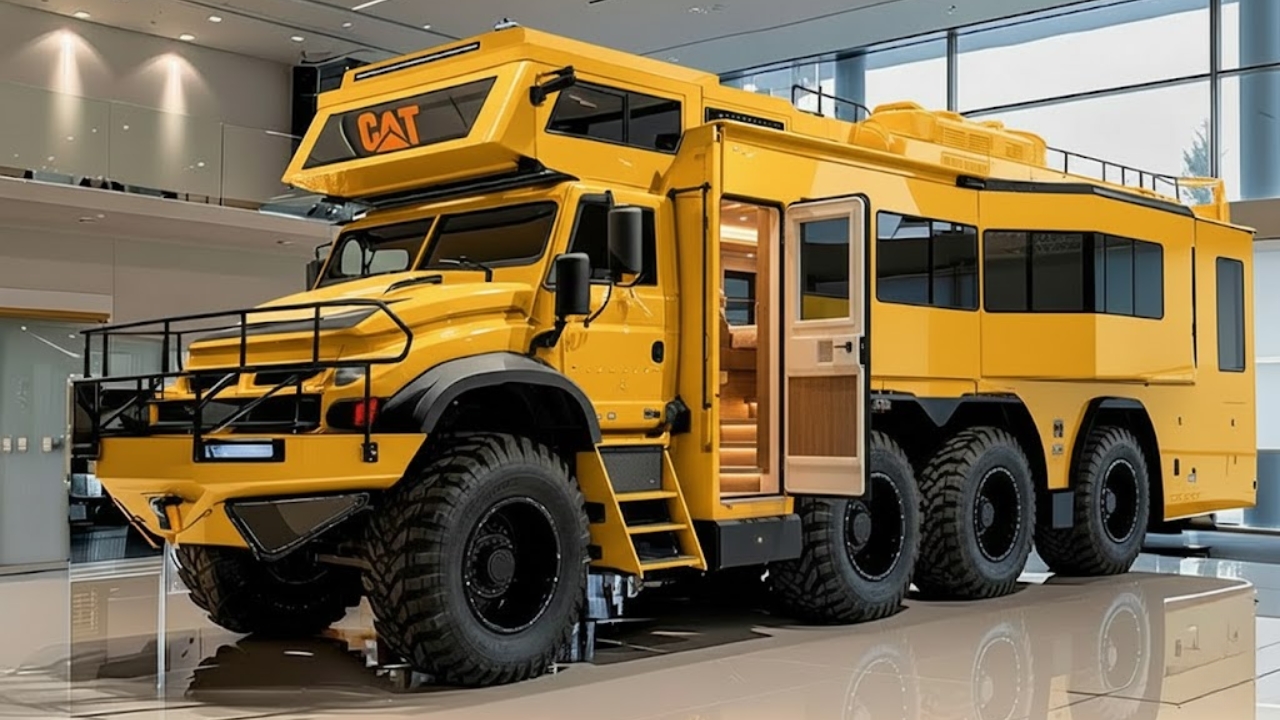
The 2026 Caterpillar 8×8 Overland RV Beast arrives as the most formidable mobile base camp ever imagined. Built on an industrial‑grade eight‑wheel chassis, the vehicle blends military‑spec durability with a livable interior that rivals high‑end luxury caravans. It is aimed at adventurers who need to travel weeks or months without relying on any external infrastructure—research teams mapping remote regions, humanitarian crews delivering aid, and extreme overlanders hunting the planet’s most inaccessible trails. Every system, from the powertrain to the cabin amenities, is engineered to survive deserts, tundras, jungles and high‑altitude passes without compromising comfort.
Exterior Design
The Beast’s exterior resembles a rugged utility platform more than a traditional RV. A high‑strength steel frame is wrapped in a composite skin that resists corrosion, UV radiation and impact from rocks or falling debris. The chassis sits high off the ground, giving a ground clearance of 1.3 metres and approach angles exceeding 45 degrees, which lets the rig climb steep obstacles that would stop a conventional motorhome.

Eight large, all‑terrain tires—dual‑sized for front and rear axles—provide traction on sand, mud, ice and loose gravel. The front bumper is reinforced with a bull bar that houses a 12‑ton winch, while side‑mounted gear boxes hold tool racks, spare‑tire carriers and modular storage lockers. Roof-mounted cargo baskets can carry up to 2 tonnes of gear, from kayaks to solar arrays, and the vehicle is equipped with LED light bars and floodlights that illuminate a 400‑square‑metre work area at night.
Interior and Living Comfort
Step inside and the Beast feels like a self‑contained research station. The cabin is insulated with a multi‑layer envelope that offers a R‑value suitable for arctic conditions, while a controlled‑air system maintains a stable 20 °C interior whether the outside temperature is –30 °C or 45 °C.

Sleeping space is offered by two queen‑size berths that can be configured as a single large lounge area during the day. The modular living zone includes fold‑out work tables, mounting points for laptops, and plug‑in points for scientific equipment. A diesel‑plus‑induction hybrid kitchenette features a sealed induction cooktop, a 150 L refrigerator/freezer combo, and a water‑purification system capable of turning 5 L of river water per minute into potable water.
The wet‑bath module contains a pressurized shower with a 40‑liter tank, a composting toilet that integrates a solar‑powered incinerator, and a small laundry washing basin. All furnishings are bolted to vibration‑dampened brackets to prevent rattling on rough terrain, and the flooring is a heavy‑duty, non‑slip composite that can withstand abrasion from tools and equipment.

Infotainment and Technology
Connectivity is a cornerstone of the Beast’s design. A central command console spans the dash, offering multi‑screen displays for GPS, terrain mapping, vehicle diagnostics and satellite‑phone functions. The system pulls data from a dual‑frequency GNSS antenna, delivering centimeter‑level positioning when paired with differential corrections.
When cellular coverage fades, a built‑in Ku‑band satellite modem provides internet speeds up to 10 Mbps, enough for emailing scientific data or streaming video to a remote base. The cabin Wi‑Fi router creates a local 5 GHz network for tablets, laptops and wearables.

Safety and communication are reinforced by an integrated UHF/VHF radio, an emergency beacon that transmits a distress signal to the Global Maritime Distress and Safety System, and a night‑vision camera array that streams thermal imagery to the driver’s display. The battery management system monitors a 90 kWh lithium‑iron‑phosphate pack, balancing charge between solar panels (up to 5 kW), the diesel generator and regenerative braking.
Powertrain and Performance
Under the hood sits a 14‑liter turbo‑charged diesel engine delivering 1,200 hp at 2,200 rpm and a torque peak of 3,800 Nm. The engine feeds a 12‑speed automatic transmission with electronic torque vectoring across the eight wheels. Each axle is equipped with a lockable differential and an electronic slip‑control system that can divert up to 80 % of available torque to the wheel with the most grip.

Fuel capacity is split between two 1,200‑liter tanks, giving the Beast a range of roughly 3,000 km on a single fill when running at a moderate 50 km/h cruise speed on mixed terrain. An optional hybrid module adds a 30 kW electric motor that can propel the vehicle on pure electric power for up to 30 km, useful for silent approaches in wildlife surveys.
Ride Quality and Handling
Despite its massive size, the Beast rides surprisingly smoothly. A long‑travel, fully independent suspension on each wheel provides up to 500 mm of wheel travel, absorbing the impact of rocks, dunes and ruts. Hydraulic dampers are electronically tuned, allowing the driver to select “Desert,” “Mountain” or “Snow” modes that adjust compression and rebound rates.

A hydraulic steering assist reduces the effort needed to maneuver the 20‑ton rig at low speeds, while a hill‑hold and descent control system modulates brake pressure on steep grades, preventing wheel spin and runaway scenarios. The high‑ground‑clearance chassis, combined with a low centre of gravity achieved by placing the fuel and battery packs beneath the cabin floor, offers stable handling even on side‑sloping terrain.
Safety and Driver Assistance
Safety is addressed through a layered approach. Front and rear radar units monitor obstacles up to 150 m away, providing automatic emergency braking if a collision is imminent. The vehicle’s roll‑over protection system engages deployable side‑bars that lock into place when a critical tilt angle is detected.
Fourteen high‑definition cameras give a 360‑degree view around the rig, feeding a panoramic display inside the cabin. Thermal imaging overlays allow drivers to spot wildlife or people in low‑visibility conditions. An integrated fire‑suppression system blankets the engine bay and fuel compartments, ready to activate at the first sign of an overheat or fuel leak.
Practicality and Storage
Every square centimetre of the Beast is dedicated to usable storage. Exterior side lockers, each with a 200 L capacity, are weather‑sealed and can be locked from inside the cabin. A rear workshop bay includes a mobile workbench, a universal tool rack and a 150‑kg crane for loading heavy equipment onto the roof racks.

Inside, modular cabinets line the walls, offering space for food rations, medical supplies, spare parts and scientific instrumentation. The water tank, with a capacity of 1,500 L, is split into a fresh‑water section and a grey‑water collection system that can be filtered and reused for non‑potable purposes. Heavy‑duty floor panels incorporate recessed tie‑down points for securing cargo during high‑speed travel.
Pricing and Market Position
If the Beast moves from concept to production, it will occupy the ultra‑premium segment of expedition vehicles, competing with bespoke builds from manufacturers like EarthRoamer and Extreme Expedition Vehicles. A base configuration is projected to start around US $850,000, while fully optioned models—including hybrid propulsion, extended fuel tanks and custom scientific labs—could exceed US $1.5 million. The price reflects the extensive engineering, high‑strength materials and integration of advanced communication and safety technologies.

Final Verdict
The 2026 Caterpillar 8×8 Overland RV Beast is more than a vehicle; it is a mobile base of operations that merges raw power with sophisticated livability. Its eight‑wheel chassis conquers terrain that would stop almost any other RV, while the interior offers an environment where crews can live, work and rest for weeks without external support. For an audience that demands absolute reliability in the world’s most hostile environments—whether for scientific expeditions, humanitarian missions or extreme adventure—the Beast sets a new benchmark in mobile resilience and autonomy.
Frequently Asked Questions
-
What is the maximum payload the Beast can carry?
The chassis is rated for a total payload of 10 tonnes, including crew, equipment, fuel and water.
-
Can the vehicle operate in completely off‑grid conditions?
Yes. The combination of large solar arrays, a diesel generator, and a 90 kWh battery pack supplies enough energy for all cabin systems and the propulsion motor for weeks without external power. -
How much water does the Beast store, and can it be refilled in the field?
The water system holds 1,500 L of fresh water. It can be refilled from natural sources using the onboard filtration unit, which processes up to 5 L per minute to meet drinking‑water standards. -
Is the Beast compatible with optional scientific equipment?
The interior includes modular mounting rails and a dedicated power distribution panel designed to support a range of laboratory instruments, radar units and communication gear. -
What kind of warranty or support does Caterpillar offer for this platform?
For production models, Caterpillar plans to provide a three‑year limited warranty covering powertrain, chassis and electronic systems, plus a global service network with mobile field technicians.
Disclaimer
The information presented herein reflects the specifications and concepts released by Caterpillar for the 2026 8×8 Overland RV Beast. Production details, pricing, and availability are subject to change, and the vehicle is currently a concept prototype. Potential buyers should verify all specifications with an authorized Caterpillar representative before making any purchasing decisions.