Introduction
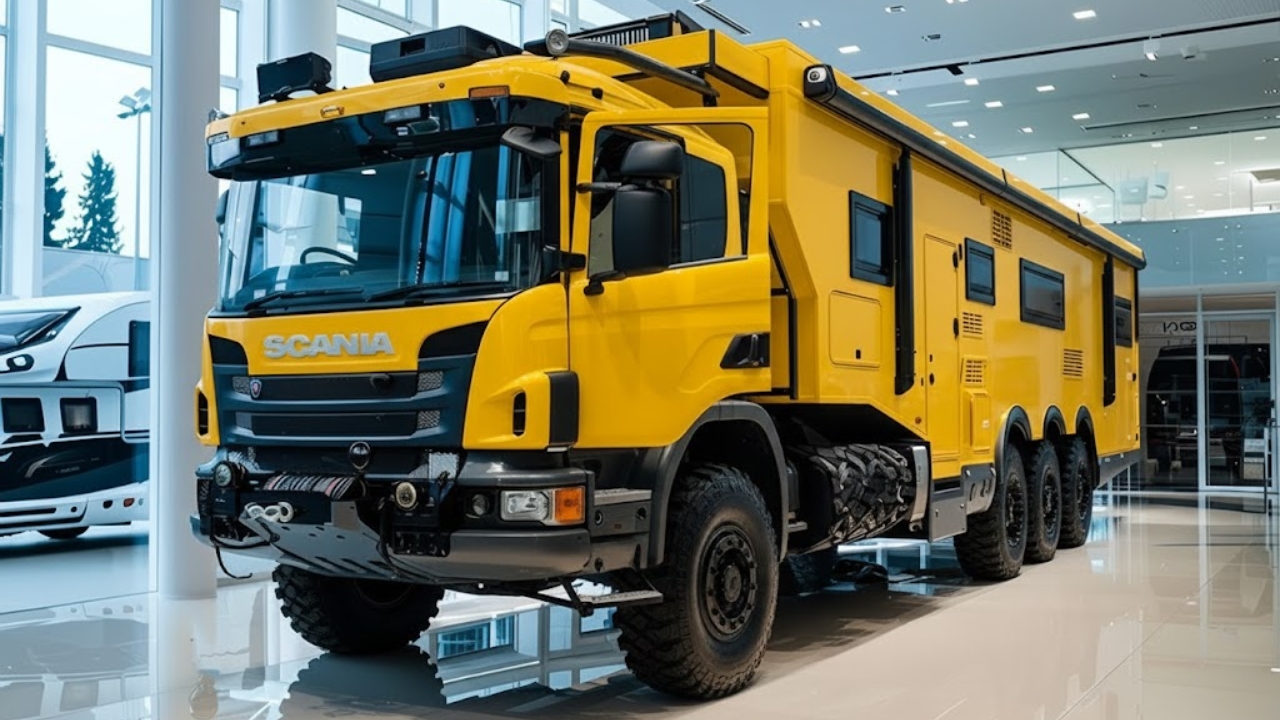
The 2026 Scania 8×8 Desert Cruiser has arrived as the newest benchmark for ultra‑long‑range, off‑grid exploration. Designed to thrive in the most unforgiving deserts, volcanic plateaus, and remote mountain passes, this eight‑wheel behemoth blends industrial‑grade durability with a level of comfort that rivals five‑star resorts. Whether you are a professional documentary crew, an expedition scientist, or an adventure‑seeking family, the Cruiser promises to turn months of isolation into a self‑contained, mobile sanctuary.
Exterior Design
From the moment the Cruiser rolls out of the Scania plant, its presence is unmistakable. A hardened steel‑composite chassis forms a near‑impervious shell, while a high‑ground‑clearance suspension gives the vehicle a commanding stance over dunes and jagged rocky outcrops. The body panels are coated with a ceramic‑based, heat‑reflective finish that deflects solar radiation and resists abrasive sand particles.

Key exterior elements include a dual‑snorkel system that channels filtered air into the engine bay, protecting critical components from dust storms. The roof is fitted with a modular rack capable of carrying up to 2,500 kg of gear, from solar arrays to a compact field laboratory. Integrated LED light bars wrap the front, sides, and rear, delivering 50,000 lumens for night‑time operations. Front and rear winches, each rated at 15 tonnes, provide reliable self‑recovery, while a rear‑mounted spare tire is protected behind a reinforced latch system. The vehicle’s silhouette, though massive, is deliberately aerodynamic to minimize drag during extended highway cruising.
Interior and Comfort
Inside the Desert Cruiser, the emphasis shifts from brute force to refined habitability. The cabin is sealed against sand ingress and pressurized to maintain a stable internal environment, even when external winds exceed 150 km/h. Climate control is governed by a dual‑zone system that can simultaneously keep the sleeping quarters at 22 °C while the command console remains at a cooler 16 °C for equipment preservation.

Accommodations are configurable for a crew of two to five, featuring modular bunks that fold into wall panels when not in use. The master sleeping area incorporates a memory‑foam mattress, climate‑controlled covers, and integrated reading lights. A compact yet fully equipped kitchenette includes a 120‑volt induction cooktop, a refrigeration unit capable of maintaining sub‑zero temperatures, and a water purification system that can turn up to 500 L of raw desert water into potable supply within minutes.
A separate wet‑area houses a private shower with a recirculating water system that recovers up to 80 % of used water, feeding it back into the onboard tanks after filtration. The dry‑toilet uses a carbon‑based waste treatment that eliminates odor and reduces the need for external disposal. Throughout the interior, sound‑absorbing panels reduce engine noise, creating a tranquil environment despite the massive powertrain humming beneath.

Infotainment and Technology
Scania has equipped the Cruiser with a mission‑critical suite of electronic systems that merge navigation, communication, and data management into a single, intuitive interface. A set of three 12‑inch touchscreen displays forms the central command hub, offering real‑time diagnostics of engine health, battery status, and suspension geometry. Satellite navigation works in conjunction with a high‑precision GNSS receiver, delivering centimetre‑level positioning even when the sky is obscured by sandstorms.
To keep the crew connected, the vehicle carries a dual‑band satellite modem capable of 30 Mbps downlink speeds, supporting video conferencing, live streaming, and cloud backup of field data. A drone‑launch bay on the roof can deploy a compact quadcopter equipped with thermal imaging and LiDAR, providing aerial reconnaissance and terrain mapping without the need for external equipment.

Power distribution is managed by an intelligent energy‑management system that automatically balances input from the diesel‑hybrid engine, solar array, and regenerative braking to optimise battery life. Wireless charging pads are embedded in the cabin table, and a series of USB‑C and 230 V outlets are strategically placed for external gear. Over‑the‑air updates ensure that software stays current, while a built‑in cyber‑security suite guards against unauthorized access.
Powertrain and Performance
At the heart of the Desert Cruiser lies a high‑output diesel‑hybrid unit delivering 750 hp and 2,800 Nm of torque. The engine is paired with an eight‑speed automatic transmission featuring torque‑vectoring capabilities that allocate power to each wheel independently, ensuring maximum grip on shifting sand dunes, loose volcanic ash, or steep rocky inclines.

A secondary 250 kW electric motor assists during low‑speed maneuvers and provides silent operation when the crew wishes to minimise acoustic signatures—particularly useful for wildlife research. The hybrid system also supports multi‑fuel compatibility, allowing the vehicle to run on biodiesel, conventional diesel, or synthetic fuels sourced from remote refuelling stations.
Fuel capacity is split across three integrated tanks, offering a combined range of roughly 4,200 km on a single fill. An auxiliary fuel cell unit can extend endurance by an additional 1,000 km, drawing on onboard hydrogen storage. Regenerative braking recovers kinetic energy on downhill stretches, feeding it back into the high‑capacity lithium‑titanate battery pack, which is rated for 120 kWh of usable energy.
Ride Quality and Handling
Despite an overall length exceeding 10 m, the Cruiser behaves with an agility uncommon for vehicles of its class. Adaptive air suspension automatically adjusts ride height and damping rates based on terrain feedback, providing a smooth ride over sand ripples while stiffening up for high‑speed desert runs. Low‑pressure tires, infused with a proprietary “sand‑float” compound, increase footprint and prevent sinkage on soft terrain.
The steering system incorporates a hydraulic assist that multiplies driver input, enabling precise articulation when navigating narrow canyon passes or performing rock‑crawling maneuvers. A dedicated “Crawl Mode” reduces torque output and engages a progressive gear ratio, allowing the vehicle to climb gradients of up to 45 % at a crawl speed of 5 km/h. When the crew desires a faster pace, an “Express Mode” unlocks the full powerband, delivering stable handling up to 130 km/h on compacted desert surfaces.

Safety Features
Safety is engineered into every facet of the Cruiser, acknowledging that rescue may be days away in remote locations. The cabin is built around a reinforced survival‑cell frame that absorbs impact energy while preserving occupant space. An array of pressure sensors monitors cabin integrity, triggering automatic seal reinforcement if a breach is detected.
External detection systems include thermal imaging cameras, LIDAR scanners, and radar modules that constantly map surrounding obstacles, feeding alerts to the driver via audible and visual cues. Collision avoidance algorithms can automatically apply the brakes or steer the vehicle away from imminent hazards.

Inside, a multi‑airbag network protects occupants during sudden deceleration, while fire‑suppressant foam lines are installed throughout the engine bay and fuel compartments. An emergency egress hatch on the roof provides a secondary exit route, and a built‑in satellite beacon transmits the vehicle’s exact coordinates to rescue authorities at the push of a button.
Practicality & Storage
The Desert Cruiser is a mobile base camp. Its internal cargo bay, accessed through side doors and a rear hatch, offers a total of 18 m³ of configurable storage. Heavy‑duty shelving and drawer systems enable quick organization of scientific instruments, spare parts, and survival rations. A dedicated module for an all‑terrain vehicle—such as an ATV or lightweight dune buggy—slides into the rear compartment and can be deployed via a hydraulically powered ramp.

Water storage is divided into three insulated tanks holding up to 2,000 L of water, each equipped with a multi‑stage filtration system that removes particulates, bacteria, and salts. An atmospheric water generator can harvest moisture from the desert air, providing an additional 30 L of potable water per day under optimal humidity conditions.
Energy generation is not limited to the hybrid engine; a roof‑mounted solar array spanning 4 m² can deliver up to 5 kW of power during peak sunlight, feeding both the battery bank and auxiliary systems. A portable wind turbine can be unpacked for use at base camps, further extending off‑grid endurance.

Pricing & Availability
Scania plans to release the Desert Cruiser in a limited series of 150 units worldwide, focusing on customers who require a self‑sufficient platform for extreme operations. Base pricing starts at US $1.85 million, which includes the core eight‑wheel chassis, hybrid powertrain, and standard interior configuration.
Optional packages are available:
- Long‑Range Expedition Pack – adds a 2,500 L auxiliary fuel tank, additional solar panels, and an extended water purification suite.
- Luxury Off‑Grid Edition – upgrades cabin finishes with premium leather, a panoramic glass ceiling, and a high‑end sound system.
- Recon & Surveillance Spec – integrates a thermal imaging turret, encrypted communications suite, and a concealed drone bay.
Orders are expected to commence in Q2 2026, with first deliveries projected for early 2027. Production slots are allocated on a first‑come, first‑served basis, and Scania requires a 30 % deposit to secure a build slot.
Final Verdict
The 2026 Scania 8×8 Desert Cruiser pushes the envelope of what a road‑legal vehicle can achieve in hostile environments. Its combination of eight‑wheel torque distribution, hybrid endurance, and a self‑sustaining living module creates a platform that is simultaneously a rugged workhorse and a comfortable home. For teams that need to operate far from civilization—whether for scientific research, cinematic production, or high‑stakes exploration—the Cruiser offers a level of independence that is rarely matched. In the desert, where the line between survival and luxury is thin, this machine makes that line disappear entirely.
Frequently Asked Questions
1. How much fuel does the Cruiser consume on mixed terrain?
Average consumption varies with load and terrain, but on a typical desert‑to‑rocky mix the hybrid system uses roughly 30 L of diesel per 100 km, supplemented by electric assistance during low‑speed crawling.
2. Can the vehicle operate entirely on electric power?
While the 120 kWh battery can power the cabin systems and low‑speed maneuvers for several hours, the diesel‑hybrid engine is required for sustained high‑speed travel and heavy‑load towing.
3. What is the expected maintenance interval for the drivetrain?
Scania recommends a full service every 15,000 km or 12 months, whichever comes first. The hybrid components have a separate service schedule of 30,000 km.
4. Is the solar array removable for use as a ground‑mounted system?
Yes, the roof panels are designed with quick‑release brackets, allowing them to be detached and repositioned on the ground for stationary power generation.
5. Does the Cruiser support third‑party accessories, such as custom laboratories?
The interior modularity and external mounting points are built to accommodate a wide range of third‑party modules. Scania provides an open‑interface specification for seamless integration.
Disclaimer
The information provided in this article is for general reference only. Specifications, pricing, and availability are subject to change without notice. Prospective buyers should consult an authorized Scania dealer for the most current details and for advice tailored to their specific operating requirements.